Published 8 August 2026 · 7 min read
WhatsApp Automation for Restaurants in India: Orders, Tables, and Follow-up
Trootlabs Editorial Team
AI automation practitioners serving businesses across India
Last updated 11 August 2026
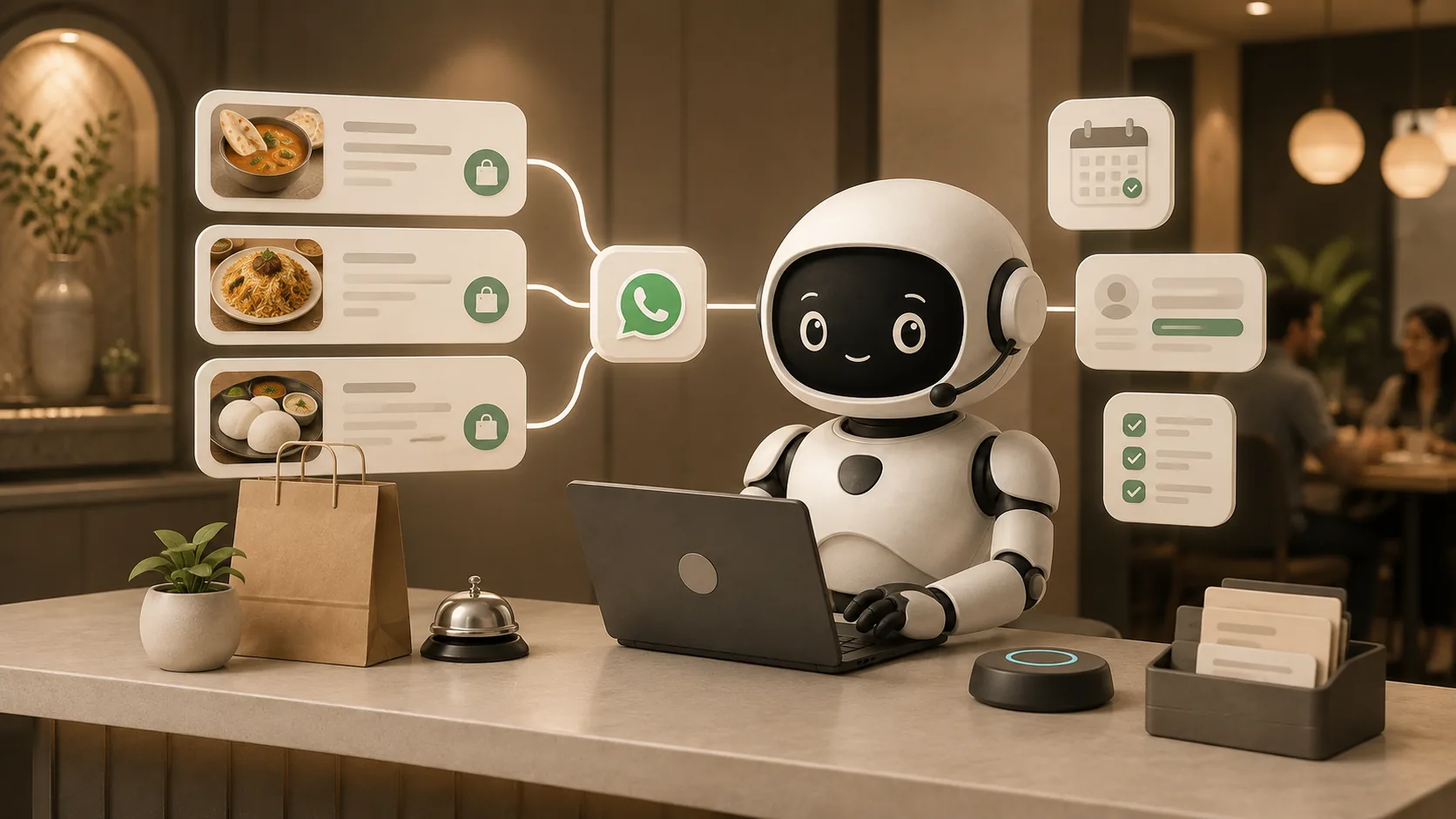
WhatsApp automation for restaurants connects a verified business messaging channel to the restaurant’s approved menu, ordering rules, reservation availability, payment flow, and human inbox. The goal is not to create a general-purpose chatbot. It is to help a guest complete a specific restaurant action without waiting for a staff member to stop service and answer the phone.
Where restaurant enquiries get stuck
The hardest moments are predictable: the dinner rush, the period before opening, and late-night planning for the next day. Guests ask whether a table is available, whether an item is vegetarian, whether delivery reaches their area, or whether a large order can be prepared. Each unanswered message has a short shelf life.
A useful restaurant workflow therefore starts with intent. Is the guest trying to order, reserve, ask a menu question, change an existing booking, or speak to the restaurant? Each intent needs its own data and completion rule.
What should a restaurant WhatsApp bot handle?
A controlled ordering and reservation assistant can:
- show the current menu or catalogue;
- answer questions from approved item descriptions;
- collect item, quantity, variation, address, and pickup or delivery details;
- confirm the complete order before submission;
- check reservation availability and collect party size;
- send payment or deposit instructions;
- send order and reservation confirmations;
- transfer unusual requests to staff with the conversation attached.
Meta’s official WhatsApp Cloud API is the business messaging interface used to send and receive WhatsApp messages programmatically. The official Meta WhatsApp Cloud API collection documents the underlying messages and webhook workflow. A restaurant still needs its own menu source, operating rules, integrations, and escalation process around that channel.
Order capture and table booking are different workflows
An order needs products, quantities, modifiers, fulfilment details, totals, and confirmation. A reservation needs date, time, party size, availability, guest details, and sometimes a deposit. Reusing one generic booking card for both makes the experience confusing and increases errors.
Treat them as two distinct paths that share a customer record and staff inbox. This is the approach shown on our restaurant automation solution: order capture, table booking, and after-hours calls each have their own completion logic.
How to design the ordering conversation
Keep the path short and reversible.
- Confirm fulfilment: pickup, delivery, or dine-in preorder.
- Use the live menu: never let the model invent an item, price, or availability.
- Collect modifiers explicitly: size, spice level, add-ons, allergies, and quantity.
- Repeat the order: show the full basket and total before submission.
- Confirm the next step: payment link, pay on pickup, kitchen acceptance, or staff review.
Allergy questions require special care. The bot can repeat approved ingredient and allergen information, but uncertain or medical-risk questions should move to trained staff rather than being inferred.
How to design the reservation conversation
A reservation flow should only offer slots that the restaurant can honour. It needs the same table inventory used by staff, clear rules for large parties, and an explicit status such as requested, confirmed, waitlisted, or cancelled.
If the calendar or reservation system is unavailable, do not claim the table is booked. Capture the request, explain that confirmation is pending, and notify staff. Reliability is more important than appearing instant.
Where should a human take over?
Define handoff conditions before launch. Typical restaurant exceptions include allergy uncertainty, complaints, refunds, catering enquiries, very large parties, out-of-area delivery, custom cakes, and repeated payment failures.
The handoff should include the guest’s name, intent, order or reservation state, and the unanswered question. Staff should not need to make the guest repeat the whole conversation.
What about templates, consent, and promotions?
A guest asking about an order is different from a restaurant sending a promotional campaign. Use approved templates where required, keep opt-in evidence, respect opt-outs, and segment service messages from marketing. In India, TRAI’s customer preference framework explains the regulatory purpose of aligning commercial communication with recipient consent and preferences. Confirm current requirements with your messaging provider and professional adviser.
A safe follow-up sequence stops when the customer orders, declines, opts out, or asks for a person. More reminders are not automatically better.
How should restaurants measure the result?
Measure completed business actions: accepted orders, confirmed tables, recovered after-hours enquiries, average response time, handoff rate, order corrections, cancellations, and opt-outs. Separate automated completions from staff-assisted completions so you can see where the workflow is genuinely useful.
The WhatsApp AI Automation service can be combined with ecommerce and online ordering when a restaurant wants one menu and checkout across web and messaging.
Frequently asked questions
Can the same WhatsApp number handle orders and reservations?
Yes, provided the opening questions route each intent into a distinct workflow and both paths share the restaurant’s current operating data.
Will the bot invent menu items?
It should not. Restrict answers and ordering actions to the current approved menu, including prices and availability, and escalate anything outside it.
Can staff take over mid-conversation?
Yes. A shared inbox and clear assignment rules are essential, especially for complaints, large orders, and uncertain requests.
Should a restaurant automate every message at once?
No. Start with the highest-volume path—usually menu questions plus order capture or reservations—then expand after reviewing real conversations.