Published 11 August 2026 · 8 min read
AI Receptionist for Small Businesses in India: A Practical 2026 Guide
Trootlabs Editorial Team
AI automation practitioners serving businesses across India
Last updated 11 August 2026
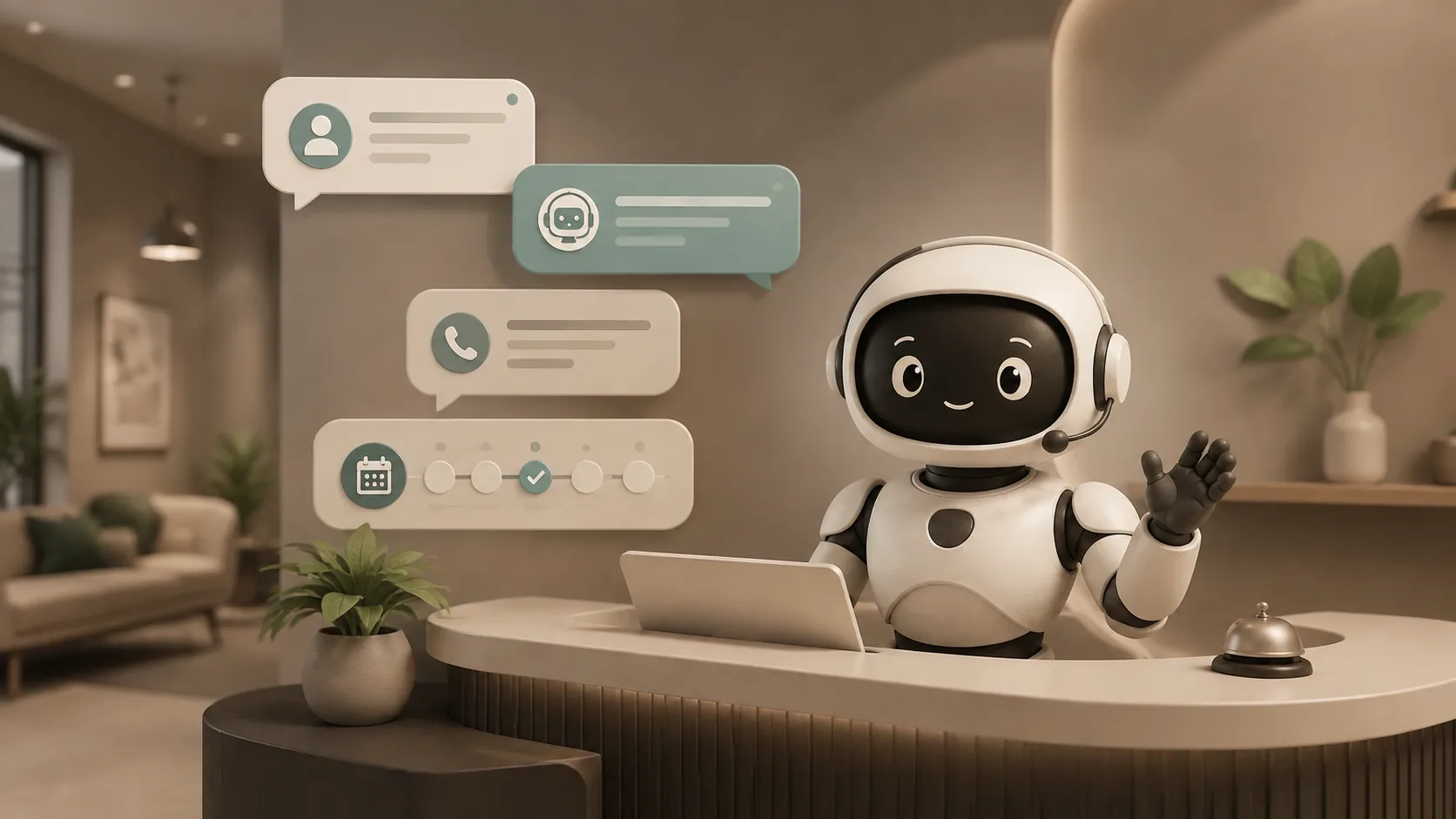
An AI receptionist is a business-specific voice or messaging agent that answers routine enquiries, uses approved information, completes permitted actions such as bookings, and transfers exceptions to a person. For a small business, the value is not replacing the front desk. It is making sure every customer gets a useful next step when staff are busy or the business is closed.
What can an AI receptionist actually do?
A well-scoped AI receptionist can answer opening hours, explain approved services and prices, check availability, book or reschedule appointments, capture lead details, send confirmations, and record the conversation in a CRM. It should not invent an answer, make a sensitive judgment, or continue when the customer asks for a person.
The safest operating model has three layers:
- Approved knowledge: hours, services, prices, locations, policies, and frequently asked questions.
- Permitted actions: booking a free slot, creating a lead, sending a confirmation, or routing a call.
- Human boundaries: medical questions, disputes, unusual discounts, complaints, emergencies, and anything uncertain.
This boundary matters more than how human the voice sounds. A natural voice with weak rules creates risk; a clear system with reliable escalation creates operational value.
Which small businesses benefit first?
The strongest first use cases have frequent, repetitive enquiries and a clear next action. Clinics receive appointment and timing calls. Restaurants receive reservation, menu, and order questions. Schools receive admission enquiries. Salons receive availability and service questions. Real-estate teams receive property and site-visit enquiries.
An AI receptionist is less useful when almost every conversation needs senior judgment or when call volume is too low to justify integration. In those cases, a better website form or shared inbox may be the more sensible first investment.
AI receptionist versus call centre versus IVR
A traditional IVR asks callers to choose from a fixed menu. A call centre uses people who can reason broadly but must be staffed and scheduled. An AI receptionist sits between them: it can understand natural requests and complete narrow workflows, but it still needs explicit rules and a human escalation path.
Choose an IVR for simple routing, a call centre for complex conversations at scale, and an AI receptionist for high-volume routine enquiries that lead to predictable actions. Many businesses will use a combination rather than one system alone.
What should the first workflow include?
Start with one measurable journey rather than every possible call. A clinic might begin with appointment booking and rescheduling. A restaurant might begin with table reservations. A school might begin with admission enquiry capture and counsellor callbacks.
A practical rollout follows five steps:
- Collect real enquiries. Review recent calls and messages to find the questions customers actually ask.
- Approve the answer set. Assign an owner for prices, policies, hours, and escalation rules.
- Connect one action. Link the relevant calendar, CRM stage, reservation book, or callback queue.
- Test exceptions. Try unclear requests, interruptions, language changes, complaints, and requests for a human.
- Launch with review. Monitor transcripts and outcomes daily before expanding the scope.
Our AI Voice Agents service follows this narrow-first approach, and Orbit, the Customer Concierge shows how reception and routine support can share one controlled queue.
How much does an AI receptionist cost in India?
Pricing usually has three components: initial workflow setup, ongoing platform or support fees, and usage costs for telephony and AI processing. The cheapest demo is not always the cheapest operating system. Calendar, CRM, call routing, monitoring, and exception handling determine whether it actually reduces missed demand.
Trootlabs publishes current package pricing on the pricing page. Before comparing providers, ask whether the quote includes the business number, call minutes, knowledge updates, recordings, CRM integration, human handoff, and ongoing monitoring.
What about consent and customer communication?
Inbound service conversations and outbound promotional campaigns are different workflows. Promotional calls and messages in India must respect customer preferences and applicable consent requirements. TRAI describes the TCCCPR framework as protecting recipients from unsolicited commercial communication while allowing communication aligned with consent and registered preferences. Review the current TRAI customer preference framework and obtain professional advice for your specific campaign.
Operationally, keep consent evidence, honour opt-outs, separate service notifications from promotions, and give customers an easy route to a person. This article is operational guidance, not legal advice.
How do you measure whether it works?
Track outcomes, not conversation count. Useful measures include answered enquiries, confirmed bookings, qualified leads, human transfers, failed or uncertain answers, opt-outs, and time to first response. Compare these with the same workflow before launch.
A good first month should tell you whether fewer enquiries are being lost and whether staff spend less time on repetitive work. If the agent answers more calls but produces no confirmed next steps, the workflow needs redesign.
Frequently asked questions
Does an AI receptionist replace front-desk staff?
No. The strongest use is covering repetitive and after-hours work while staff handle customers, exceptions, and sensitive conversations. The system should make human work more focused, not pretend that judgment is unnecessary.
Can it speak more than one language?
Many voice systems support multiple languages, but language availability is not the same as business accuracy. Test the exact languages, names, addresses, and domain terms your customers use before launch.
Can customers ask for a human?
They should always be able to. Define when the agent transfers live, creates a callback, or sends the conversation to a shared inbox.
What is the best first step?
Choose one high-frequency enquiry with one clear outcome, such as a booking or qualified callback. Map that workflow before choosing the voice or AI provider.